Communities That Serve, Or Audiences That Follow?

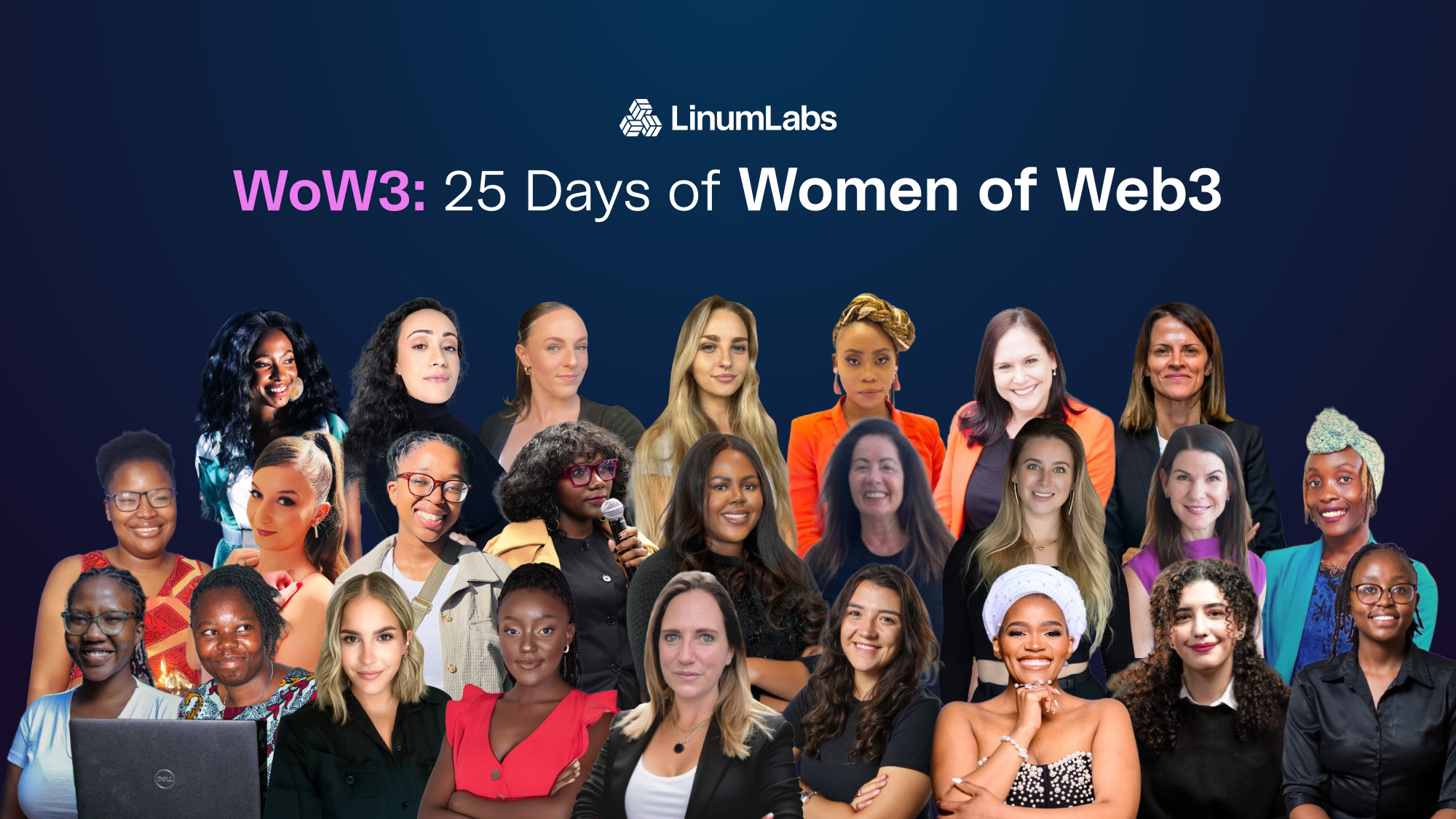
This is a reflective, opinion benchmark on how organisations such as H.E.R. DAO, SheFi, Africa's Blockchain Club, Binance SA, Women In Tech, and Linum Labs are building communities in Web3 that resist the glamour.
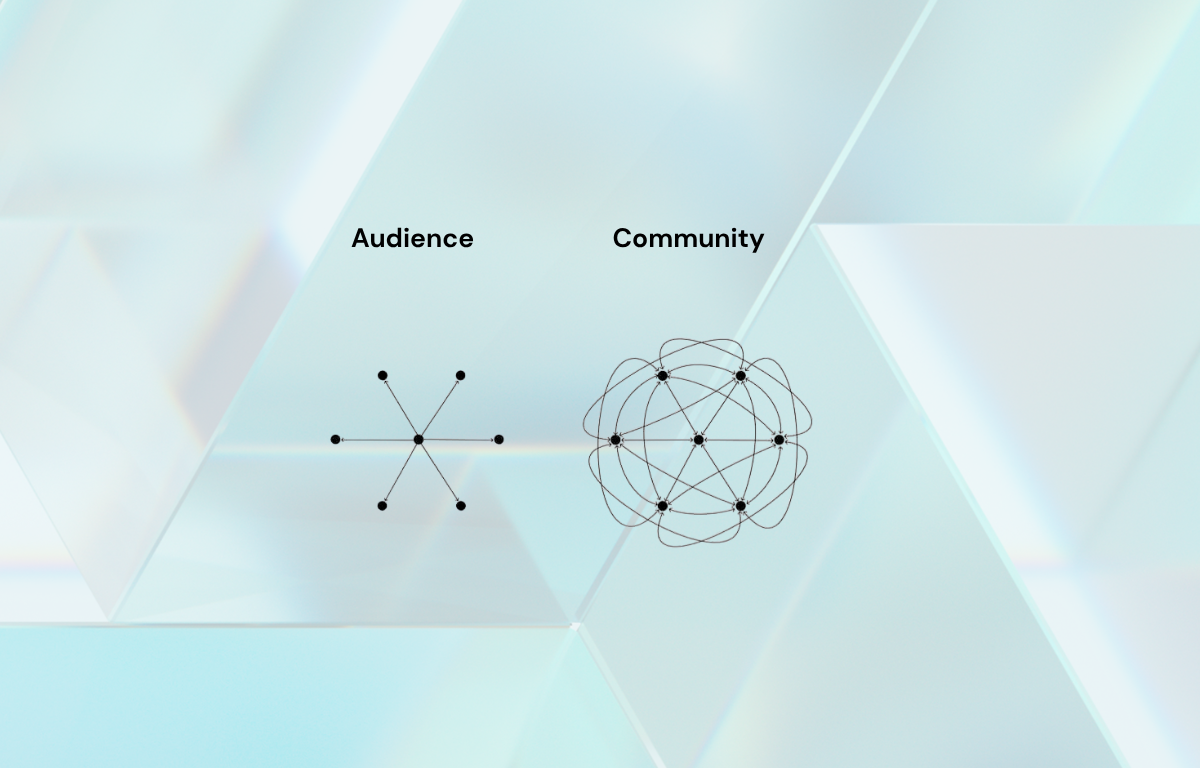
Community, simply defined, is a group of people who share something beyond a common interest. They share accountability to each other. They show up when things are hard, not just when things are exciting. Community carries the story forward together.
What is it not? A community is not a mailing list. It is not a telegram group with 5,000 members who have never spoken. It is not a marketing or sales ground.
A community that lasts is a community that does not need a constant injection of energy from the outside to keep going. It has its own impetus. New people arrive and are absorbed into an existing culture rather than arriving in a vacuum. The values are lived rather than written on a wall. The relationships are deep enough to survive disagreement and disappointment.
This kind of community grows because it is genuinely useful to the people inside it, never because it is being marketed to them, and distinguishes community building from audience building.
What then, is the problem?
There is no shortage of communities in the fintech space. However, most of the communities are not built to last.
The existing ones are either built around token launches, around hype cycles, or the personality of a single founder. And when the launch ends, or the hype moves on, or the founder burns out, the community dissolves. What is left is social media groups with old messages and spam.
Every community that falls apart takes a piece of confidence with it. It makes the next person slower to join, slower to believe, slower to invest their time.
The organisations doing this differently, the right way, deserve to be named. These organisations are solving a real problem, and solving it well, with the communities in mind. Which is why, as a community builder, interacting daily with other communities, I find it necessary to share what I have seen and experienced, alongside the Linum Labs team.
HerDAO SA: Building the Women's Pipeline, Right Here in Africa
HerDAO South Africa is the local chapter of the global H.E.R. DAO movement, building a pipeline for women who want to enter and grow in the blockchain and Web3 space, right here, with the specific realities of the South African market in mind.
One of the most tangible expressions of that commitment is the Rust School, a beginner-to-intermediate programme built around systems thinking, real projects, and production code. Cohort 01 launched in May 2026. This is a structured technical education programme that takes the question of women in blockchain seriously enough to teach them how to build at the infrastructure level.
HerDAO SA is now also part of the education pipeline feeding into UJ Blockchain at the University of Johannesburg's blockchain ecosystem. They're bringing community-level learning into academic infrastructure into one of South Africa's most forward-thinking academic blockchain programmes.
Let's talk numbers. Only 6% of blockchain CEOs are women, compared to 17% in the broader technology sector. Only 13% of crypto founding teams are led by women, and women receive just 10% of crypto startup funding. In South Africa, 7.8 million people, roughly 13% of the population, actively used cryptocurrency in the first half of 2025, according to a Discovery Bank and Visa report.
The gap between who is using crypto and who is building it is still very wide. HerDAO is one of the organisations closing it, with the kind of ground-level work that changes what is possible for women in this space one person at a time.
SheFi: What Happens When Education Becomes Community
SheFi was founded with a conviction that still runs through everything it does: the frontier is feminine.
SheFi offers a four-week programme of educational instruction, hands-on tech demos, and peer support, designed to accelerate Web3 careers. It covers crypto and AI, and is built to make learning accessible and inclusive for women and non-binary people entering the space.
The numbers behind the community are testimony to the on-ground work. SheFi now has 22,400 members across 100+ nations, 16 seasons of content, over 70 hours of material, and 100+ chapter leads around the world. A true representation of global infrastructure.
The model behind those numbers is the thing that speaks to longevity. Three things working together: education, experimentation, and community. All three, in sequence, over four weeks, and then sustained through an ongoing global network that stays alive long after the cohort ends.
What the community says about itself is the true testament to its nature. SheFi members describe it as getting an MBA in blockchain. Others say it gave them the technical confidence to pivot careers, land jobs, and participate meaningfully in crypto for the first time. One member described SheFi as the most warm, welcoming community she had ever been part of, "a much-needed safe space in a Web3 landscape still so dominated by men."
Cohort 17 is launching in Summer 2026, with scholarships available for those who cannot afford the membership fee. The scholarship model means the community is easily and openly accessible to women who need it most.
SheFi is proof that the gap between women and Web3 is not a talent problem but an access problem. And access problems are solvable, with the right structure, and the right community. Maggie Love has been instrumental in making this so.
Africa's Blockchain Club: Community is not an event
Africa's Blockchain Club represents the epitome of education. Showing up every Saturday, ABC is a community dedicated to accelerating blockchain technology adoption throughout South Africa and the entire African continent, bringing together developers, entrepreneurs, and enthusiasts to build the future of Web3 in Africa.
With a close look at ABC's values, community building is how unglamorous their commitment actually is. They meet every Saturday. Have in mind that this is not at a conference. Neither is this during a hype cycle. Every Saturday, consistently, in Johannesburg. That kind of regularity is rarer than it sounds and it is one of the clearest signals of a community that is built to last.
Their work covers three pillars: community building, education and training, and innovation through real projects. They provide resources and workshops to build blockchain skills, and their community develops smart contracts and decentralised applications to solve real-world problems in Africa through weekly coding sessions with experienced mentors.
The projects coming out of ABC are practical and even more meaningful because they're all built by people in their community. ABC also partners with education institutions including WeThinkCode and the University of Johannesburg, and has established relationships with blockchain protocols including Celo, Scroll, and others.
We have often reiterated that the community is not built in isolation. ABC have served as community partners for major events including Blockfest Africa 2026 in Cape Town and co-hosted the African Stablecoin Summit in Johannesburg in November 2025. The ABC model is proof of something simple but important: you do not need a massive budget or a famous founder to build a persisting community. You need consistency, a genuine commitment to education, and the discipline to show up even when nobody is watching.
Our collaborations with the ABC team continue to prove that our shared values are necessary for the African story.
Binance SA: Scale Without Losing the Human
South Africa is one of the most interesting case studies in community longevity at scale, precisely because scale is usually where community goes to die.
Between January 2023 and January 2026, Binance SA's local customer numbers grew by 208% year-on-year. Africa saw the fastest relative growth in crypto users in 2025, with a 52% increase in on-chain activity. These are extraordinary numbers. The risk with extraordinary growth is that community becomes a commodity, something you manage rather than something you nurture.
What Binance SA has done instead is invest heavily in education as a community-building tool. Binance Academy, the ABCs of Crypto, and Binance Junior are designed to make crypto accessible and safe for everyone, not just early adopters. Campus initiatives, partnerships with African universities and youth networks, and collaborations with platforms like AltSchool Africa offer structured Web3 training tailored to young Africans seeking digital skills.
They have also partnered with Women in Tech to provide Web3 training for 2,800 women in rural communities across South Africa and Brazil. I consider this community investment.
The core insight from Binance SA's approach: education is the most tenable form of community building. You do not retain a community by holding their attention. You retain it by making them more capable.
Women in Tech Global: Diversity Is a Performance Variable
One of the things we have come to appreciate at Linum Labs is that the most impactful organisations in this space are often led by people who are living the work rather than performing it. The case for gender diversity in community leadership is strategic as much as it is ethical, requiring that kind of leadership.
Women in Tech Global is dedicated to closing the gender gap and empowering women to embrace technology. It operates across four pillars: education, business, digital inclusion, and advocacy. It has a membership of over 250,000 individuals across chapters in 54 countries on six continents, and aims to impact 5 million women and girls in STEM by 2030. It is also one of the few civil society organisations in this space operating at the level of international diplomacy.
Among companies that both maintain gender equality commitments and plan new initiatives, 73% reported revenue growth. Companies that commit to gender parity at the top strengthen investor confidence, attract top talent, and position themselves for sustained growth, with investors, employees, and candidates all evaluating leadership diversity before making decisions.
In Web3 specifically, projects with diverse teams, particularly those emphasising community governance, weather market downturns better. Women in Tech Global, and the people like Melissa Slaymaker, who carry its mission on the ground in Africa, represent exactly the kind of decade-long commitment to showing up in the places that need it most. It is the people who keep showing up that make a community last.
What Linum Labs Believes About Community
The longer we have been in this space, the more convinced we are of a few things when it comes to community.
First: community is not downstream from the product. The best products in Web3 come from communities that understood the problem before the code was written. Community shapes requirements, surfaces edge cases, and keeps teams honest.
Second: showing up matters more than having a strategy. We go to the rooms. We bring people into the rooms. We host meetups in Johannesburg and Cape Town that do not call for the class of conferences. We spotlight the builders who are doing impeccable work and deserving of more credit through the Community Builder Spotlight series. The Lean Coffee X Spaces sessions we have recently introduced is another way to connect our communities and build the knowledge publicly.
Third: a lasting and serving community requires honest relationships before any sponsorships come into play. Not logo placement. Relationships that are committed to the long game even when the short-term incentives point elsewhere.
We have learned this from every partnership that has worked and from every one that has not. And it is the standard we hold ourselves to.
What actually builds a lasting Web3 community, a pattern across every organisation in this article, is:
- Sustained education and consistency. Forget about the one-time workshops. Ongoing, accessible, locally relevant learning that makes people more capable over time.
- Inclusive design from the start. Community structures that are built to include women, builders from underrepresented regions, and people at different stages of their journey.
- Physical presence. The data consistently shows that in-person events — less glamorous dinners, conferences, meetups — create the kind of trust that digital communities alone cannot replicate.
- Long-term commitment. The organisations in this article have all been doing this for years. Evidently, community only becomes something worthy through practice.
- Honest relationships over transactional ones. The communities that last are built on the willingness to show up even when there is nothing immediate to gain.
The next generation of Web3, outside of the technical differentiation, is going to require the people's trust. And trust is built in and with communities, deliberately and over time. That is why we spend so much of our energy here, as the foundation that everything else is built on.
If you are building in the fintech and web3 space as a founder, CTO, a developer, or a community builder, we would love to be in conversation with you.

.jpg)